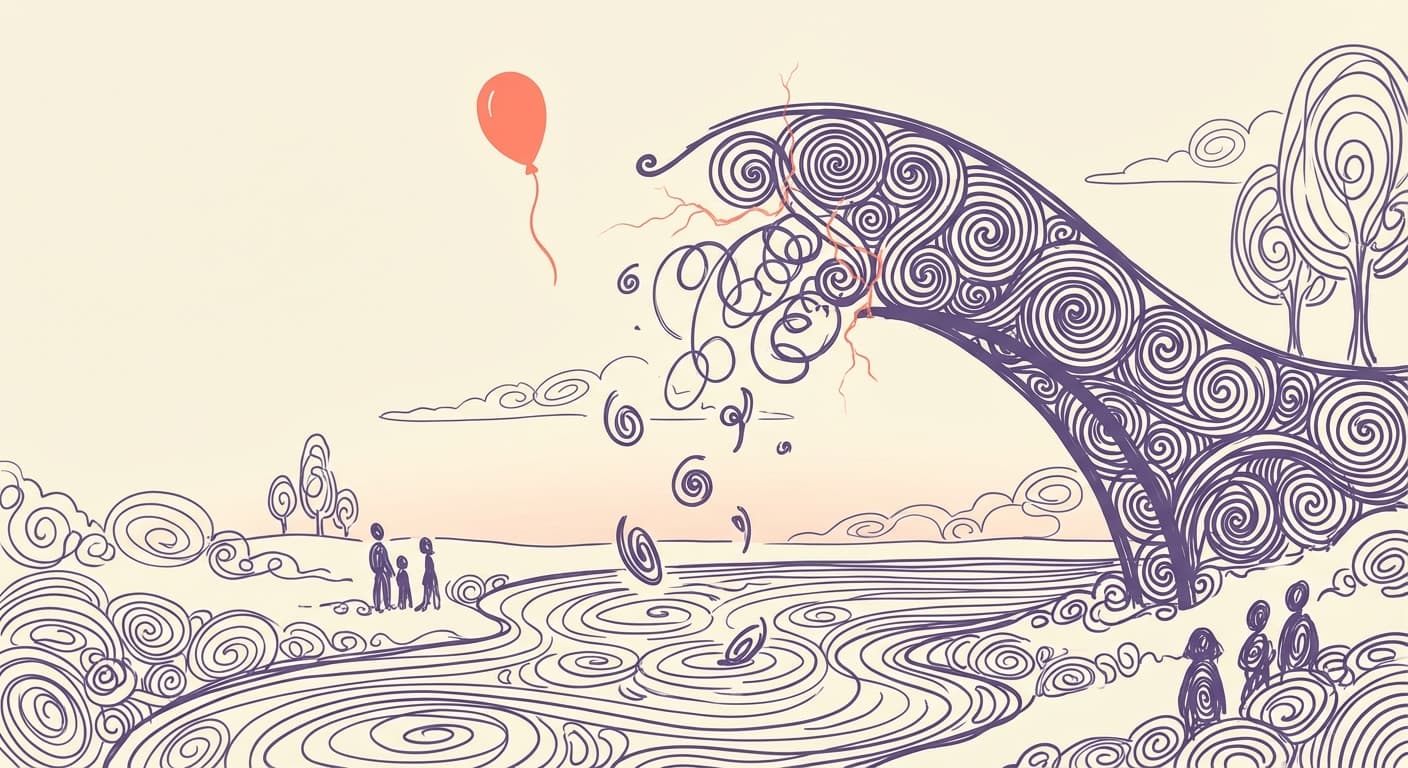
The Burnout Collapse
silent endurance with no middle ground between fine and broken
The bridge was made of glass.
Not literal glass — something stronger. Something that could hold the weight of a town crossing over, day after day, and never show a crack. People marveled at it. So clear you could see straight through to the river below. So steady it seemed like it had always been there.
The bridge learned early that showing strain was dangerous. The first time it had creaked under pressure, workers had come with their tools and their worried faces, talking about replacement, about structural failure, about liability. So the bridge learned to distribute the weight silently. To shift imperceptibly. To never, ever groan.
It carried morning commuters and evening joggers. It carried delivery trucks and school buses. It carried wedding parties and funeral processions. And it did this without complaint, without visible effort, because that's what bridges do. That's what made it safe. Reliable. The kind of bridge people didn't think about because it just worked.
The bridge didn't notice it was tired. Tiredness wasn't part of the design.
One day, a child crossed carrying a balloon.
· · ·
The bridge collapsed.
Not dramatically. Not all at once. But completely. As if every fiber simultaneously remembered it had been holding its breath and decided, without permission, to let go.
People stood on both banks, confused. The balloon drifted upward. The child was fine — someone had caught them. But the bridge lay in the river, and everyone kept asking the same question: how could a balloon break a bridge?
It wasn't the balloon.
It was that the bridge had never learned the language between fine and broken. Had never been taught that strain could be voiced before it became structural failure. That weight could be acknowledged while still being borne. That there was something between silent endurance and sudden collapse.
The bridge had learned to carry everything as if it were nothing. And so when it finally couldn't, there was no middle ground to fall to. No way to say 'I'm struggling' while still standing. Only a binary choice the body made without asking: keep pretending or stop entirely.
The river kept flowing beneath where the bridge had been. The banks stood on either side, the same distance apart they'd always been.
Someone would build another bridge. Or maybe they wouldn't. Maybe there were other ways across that didn't require being made of something that couldn't bend.
“You learned to carry everything as if it were nothing. And so when you finally couldn't, there was no middle ground to fall to.”
Which story is yours?
Map your pattern and discover the parable that already knows it.
More stories from the loop
The Chameleon
So good at being someone else that she forgot being herself was also a skill.
The Perfectionism Shell
The shell that protected her from the world had begun to protect the world from her.
The Anxiety Spiral
She was always either running or carrying the stone. There was no third place.